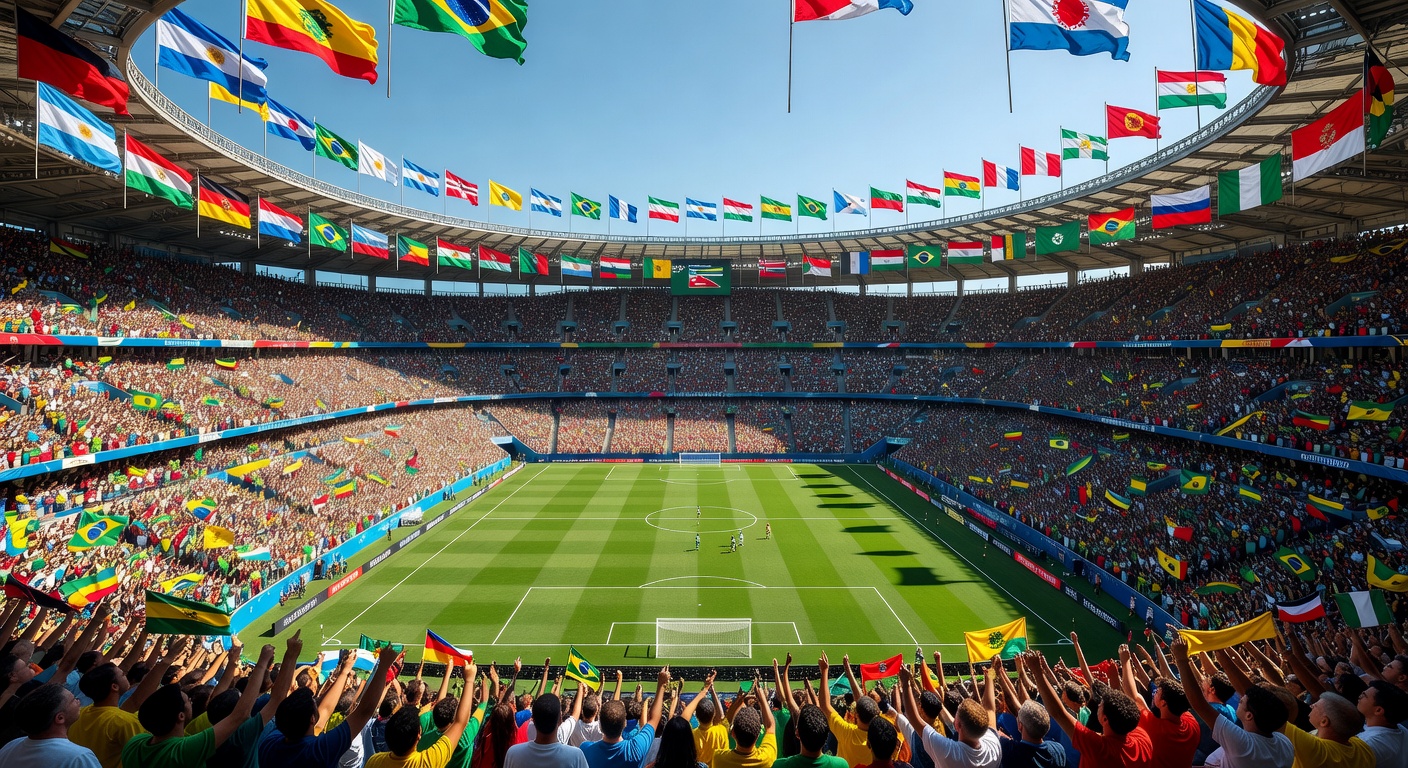
International Tournaments: Pragmatism Under Pressure
International football represents a stark contrast to the club game. Managers operate under severe time constraints, lacking the daily training ground hours required to implement complex automatisms or highly intricate pressing structures. Consequently, the tactical landscape of a World Cup or a European Championship is often defined by simplification, cohesion, and defensive resilience.
History dictates that successful national teams are built from the back. A rigid, impenetrable defensive block, paired with a reliance on explosive attacking transitions or moments of individual brilliance, is the most proven formula for international glory. We dissect how top nations construct their out-of-possession shapes, minimizing risks and forcing opponents into low-probability crossing zones.
Despite the pragmatic leanings, international tournaments remain a hotbed for rapid tactical adaptation. The condensed format means injuries, suspensions, or fatigue require immediate systemic adjustments. Our analysis highlights these rapid shifts, providing fans with a deeper understanding of how managers engineer temporary, hybrid systems that peak at the exact right moment to survive the grueling knockout stages.